
Managing transport for large-scale corporate events requires far more than booking vehicles. It demands structured logistics planning, realistic scheduling, contingency design, and experienced coordination on the ground. Melbourne Coach Hire specialises in managing high-volume corporate event transport—covering airport arrivals, hotel-to-venue shuttles, multi-venue transfers, and executive movements. By centralising transport planning and applying proven logistics frameworks, organisations reduce delays, minimise confusion, and protect attendee experience at scale. In Melbourne’s congested, event-heavy environment, professional transport coordination becomes a critical success factor for conferences, summits, and national events. The result is smoother delivery, stronger budget control, and events that run on time—without transport becoming the focus.
Large-scale corporate events are no longer rare, one-off occasions. In 2026, many Melbourne organisations are running multi-day conferences, national roadshows, all-staff gatherings, partner summits, and client-facing events—often with hundreds (or thousands) of attendees moving across multiple locations.
At this scale, transport isn’t just about getting people from A to B. It’s about logistics, coordination, risk management, and experience design.
That’s where specialist expertise matters.
At Melbourne Coach Hire, we support event teams managing complex, high-volume movements—helping them replace last-minute problem-solving with structured, repeatable logistics systems.
This article explores what makes large-scale corporate event transport work, why logistics expertise is critical, and how professional coordination protects budgets, schedules, and reputations.
Why Large-Scale Event Logistics Are a Different Discipline
Transport complexity increases exponentially as events grow.
Large-scale events typically involve:
- multiple arrival waves (airports, trains, hotels)
- staggered schedules
- multiple venues or breakout locations
- VIP and speaker movements
- immovable start and finish times
At this level, logistics failures cascade quickly. One late arrival can delay sessions, disrupt speakers, or affect hundreds of attendees.
This is why experience matters more than capacity alone.
2. The Most Common Failures in Big Event Transport
Without specialist coordination, large events often face:
- bottlenecks at hotel pickup points
- unrealistic travel time assumptions
- confusion about boarding and departure windows
- attendees missing key sessions
- Overwhelmed event staff responding to transport queries
3. What “Expert Event Logistics” Actually Means
True transport expertise goes beyond vehicles. It includes:
(A) Movement design
Mapping how people flow across:
- time blocks
- locations
- access constraints
(B) Capacity modelling
Matching:
- vehicle size
- frequency
- peak demand
(C) Contingency planning
Accounting for:
- delays
- no-shows
- congestion
- schedule changes
(D) On-the-day coordination
Clear roles, escalation paths, and calm execution.
4. Why Melbourne Events Demand Specialist Logistics
Melbourne adds layers of complexity:
- congestion and roadworks
- limited loading zones at hotels and venues
- overlapping major events
- CBD access restrictions
Experienced local planning ensures:
- realistic buffers
- correct pickup locations
- efficient routing
- reduced on-the-day surprises
5. How Large-Scale Logistics Protect Budgets
Poor transport planning costs money:
- extended venue hire
- staff overtime
- missed sessions
- reputational damage
Professional logistics protect budgets by:
- reducing last-minute changes
- minimising emergency bookings
- keeping events on schedule
Predictability is one of the biggest hidden savings.
6. The Attendee Experience at Scale
At large events, attendee experience is shaped by:
- clarity of instructions
- predictability of movement
- confidence that someone is in control
Well-managed transport delivers:
- calm arrivals
- timely departures
- minimal confusion
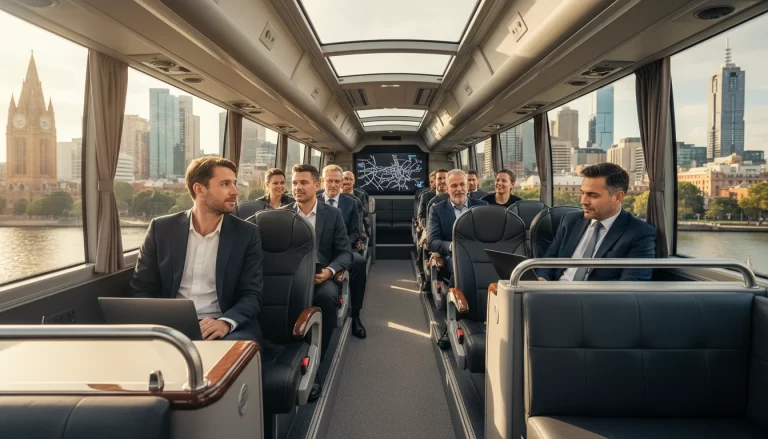
When transport feels effortless, attendees focus on content—not logistics.
7. Managing Multiple Stakeholder Needs
Large events often involve:
- internal teams
- external agencies
- venue operators
- speakers and VIPs
Transport logistics sit at the intersection of all of them.
Expert coordination ensures:
- alignment across stakeholders
- clear communication
- fewer conflicting instructions
8. Where Melbourne Coach Hire Adds the Most Value
Melbourne Coach Hire supports large-scale corporate events through:
- detailed pre-event planning
- realistic scheduling and route design
- scalable fleet access
- professional drivers briefed to event standards
- structured escalation and contingency handling
This transforms transport from a risk into a stabilising force.
9. Scaling Events Without Scaling Stress
One of the biggest benefits of expert logistics is repeatability.
When transport systems are documented and refined:
- future events are easier to deliver
- planning time reduces
- reliability improves year on year
This is how organisations scale events without scaling stress.
10. The Strategic View: Logistics as a Competitive Advantage
Events that run smoothly:
- reflect well on the brand
- strengthen internal confidence
- support long-term partnerships
Transport logistics may be invisible when done well—but their impact is significant.
Final Thought: Big Events Need Big Thinking
Large-scale corporate events succeed when complexity is anticipated—not reacted to.
By working with a partner experienced in large-scale event logistics, Melbourne organisations protect their schedules, budgets, and reputations—while delivering confident, professional events at scale. Looking for transport in Sydney?